
NewsDetails
Structural Principles of Insulated Decorative Wall Panel Systems
author:Dingming time:2026-05-07 15:29:03 Click:76
Structural Principles of Insulated Decorative Wall Panel Systems
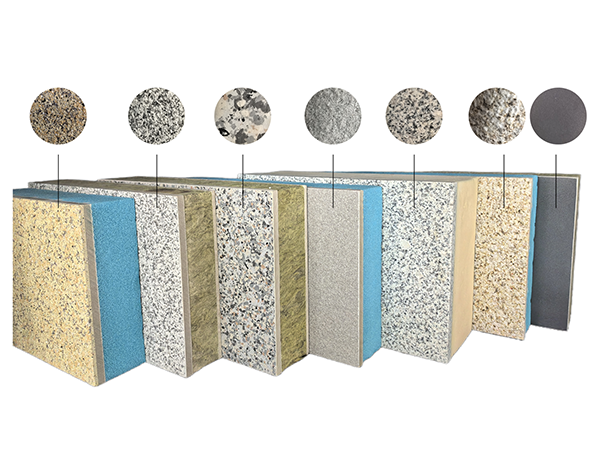
The insulated decorative wall panel system is a modern building envelope solution that integrates thermal insulation, exterior decoration, waterproofing, and structural protection into a unified composite structure. Its design principle is based on multi-layer coordination, where each layer performs a specific function while working together to ensure overall facade performance.
1. System Composition and Layer Structure
The system typically consists of four main layers:
Decorative surface layer: provides aesthetic appearance, weather resistance, and UV protection
Bonding layer: ensures adhesion between the insulation core and substrate
Thermal insulation core layer: provides energy-saving performance
Base wall (substrate): provides structural support for the entire system
Each layer is functionally independent but mechanically and chemically integrated.
2. Thermal Insulation Mechanism
The core insulation layer is the key to energy efficiency. Materials such as EPS, XPS, polyurethane, or rock wool reduce heat transfer through low thermal conductivity and trapped air structure. By forming a continuous insulation barrier, the system minimizes heat loss in winter and heat gain in summer, significantly improving building energy efficiency.
3. Mechanical Load Transfer Principle
The system relies on a dual load-bearing mechanism:
Adhesive mortar provides continuous surface bonding and distributes loads evenly
Mechanical anchors provide point-based reinforcement against wind suction and gravity
This combined system ensures redundancy, meaning that even if one component partially fails, the system remains structurally stable.
4. Waterproof and Moisture Control Mechanism
Waterproofing is achieved through a multi-level barrier system:
External coating prevents direct rain penetration
Sealed joints block water ingress
Drainage paths guide moisture away from the structure
Vapor-permeable design allows internal moisture diffusion
This prevents internal condensation, efflorescence, and material degradation.
5. Thermal Expansion and Deformation Control
Building facades experience temperature fluctuations causing expansion and contraction. The system accommodates this through:
Elastic adhesives with deformation capacity
Flexible sealants at joints
Expansion joint design across large facade areas
These measures prevent cracking and stress accumulation.
6. Wind Load Resistance Mechanism
Wind pressure is transferred from the panel surface to the substrate through:
Surface coating resistance
Structural integrity of panel layers
Adhesive bonding strength
Mechanical anchoring system
Proper load distribution prevents panel detachment in high-rise buildings.
7. Fire Safety Structural Principle
Fire resistance is achieved through material selection and system design:
Use of non-combustible or flame-retardant insulation materials
Installation of fire barriers at floor levels
Limitation of vertical fire spread paths
The system design ensures compliance with building fire safety standards.
8. Integrated System Coordination Principle
The key characteristic of this system is multi-material integration and functional synergy. Each layer must be compatible in terms of:
Thermal expansion coefficient
Adhesion performance
Moisture permeability
Mechanical strength
System failure often results from incompatibility between layers rather than single material defects.
Conclusion
The structural principle of insulated decorative wall panel systems is based on a multi-layer composite design that integrates insulation, decoration, waterproofing, and structural reinforcement. Through coordinated action of thermal insulation cores, adhesive bonding systems, mechanical anchoring, waterproof layers, and flexible joint design, the system achieves high energy efficiency, structural stability, and long-term durability in modern building envelopes.
References
ETAG 004 – External Thermal Insulation Composite Systems Guidelines
GB/T 29906 – Decorative Insulation Composite Panels for Buildings
JGJ 144 – Technical Specification for External Wall External Insulation Engineering
ASTM C578 – Rigid Cellular Polystyrene Thermal Insulation
ASTM E330 – Structural Performance of Exterior Wall Systems
ISO 10456 – Hygrothermal Performance of Building Materials
EN 13162 – Thermal Insulation Products for Buildings (Mineral Wool)
 Recommended Products
Contact us
Recommended Products
Contact us
—— Contact:Manager
—— Tel:+86 15175677755
—— Email:644244139@qq.com
—— Url:https://www.dingminginsulation.com
—— Address:Liuyuanzhuang Village, Dacheng County, Langfang City, Hebei Province