
NewsDetails
Classification of Materials Used in Insulated Decorative Wall Panels
author:Dingming time:2026-05-07 14:48:13 Click:68
Classification of Materials Used in Insulated Decorative Wall Panels
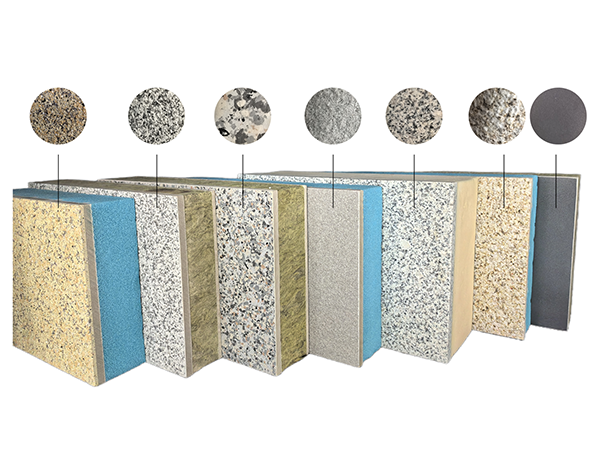
Insulated decorative wall panels are composite building materials that integrate thermal insulation, structural support, and decorative finishes into a single system. According to core functional layers and material composition, they can be classified into several main categories. Each type has different performance characteristics, application scenarios, and durability levels.
1. Insulation Core Materials
The insulation layer is the key component responsible for thermal performance. Common materials include expanded polystyrene (EPS), extruded polystyrene (XPS), polyurethane (PU), and rock wool. EPS is lightweight and cost-effective but has moderate fire resistance. XPS offers higher compressive strength and better moisture resistance. Polyurethane provides excellent thermal insulation efficiency, while rock wool is widely used for its non-combustibility and fire safety performance.
2. Surface Decorative Materials
The decorative layer determines the appearance and weather resistance of the panel. Common options include real stone coating, fluorocarbon coating, acrylic coating, and ceramic finishes. Real stone coatings simulate natural stone textures with good aesthetics. Fluorocarbon coatings provide excellent UV resistance and long-term color stability. Ceramic finishes offer high hardness and superior wear resistance.
3. Substrate Board Materials
The structural base layer ensures panel strength and dimensional stability. Typical materials include calcium silicate board, cement fiber board, and magnesium oxide board. Calcium silicate boards offer good stability and fire resistance. Cement fiber boards provide strong durability and impact resistance. Magnesium oxide boards are lightweight and have good fireproof properties.
4. Adhesive and Bonding Materials
Adhesives are used to bond insulation layers, substrates, and decorative surfaces. High-performance polymer-modified cement adhesives or polyurethane adhesives are commonly used. These materials must provide strong bonding strength, flexibility, and weather resistance to withstand temperature changes and structural movement.
5. Reinforcement Materials
To improve crack resistance and structural stability, alkali-resistant fiberglass mesh is often embedded in the system. It helps distribute stress evenly and prevents surface cracking caused by thermal expansion or structural movement.
6. Protective Coating Systems
The protective layer ensures long-term durability against UV radiation, moisture, and pollution. Common coatings include silicone-modified coatings, fluorocarbon coatings, and nano-anti-fouling coatings. These coatings enhance self-cleaning ability and reduce surface contamination.
Conclusion
Insulated decorative wall panels are composed of multiple material systems, including insulation cores, decorative finishes, substrates, adhesives, reinforcement layers, and protective coatings. The performance of the final product depends on the coordination and quality of each material layer. Proper material selection based on climate conditions, building height, and fire safety requirements is essential for ensuring long-term stability, energy efficiency, and facade aesthetics.
References
GB/T 29906 – Decorative Insulation Composite Panels for Buildings
ETAG 004 – External Thermal Insulation Composite Systems Guidelines
ASTM C578 – Rigid, Cellular Polystyrene Thermal Insulation
ASTM C1177 – Standard Specification for Glass Mat Gypsum Substrate
JGJ 144 – Technical Specification for External Wall External Insulation Engineering
ISO 12572 – Hygrothermal Performance of Building Materials
Building Energy Efficiency and Exterior Wall System Standards
 Recommended Products
Contact us
Recommended Products
Contact us
—— Contact:Manager
—— Tel:+86 15175677755
—— Email:644244139@qq.com
—— Url:https://www.dingminginsulation.com
—— Address:Liuyuanzhuang Village, Dacheng County, Langfang City, Hebei Province